
Portland, Oregon draws clinics that advertise peptide therapy for recovery, weight loss, and aging. Some operate as medical practices. Others act as marketing sites that route your information to a prescriber you cannot name. The difference matters before you pay.
Verification comes first. Ask which clinician writes the prescription and look up that person's state license in the Oregon Medical Board or Oregon State Board of Nursing public lookup. Confirm the license type: MD, DO, NP, or PA. Ask which pharmacy compounds the peptide. A 503A or 503B pharmacy follows federal rules. The FDA places some peptides on the Category 2 list, which restricts compounding. A prescription must come before dispensing.
Payment does not change those rules. A clinic that collects a fee before naming the prescriber has the order reversed. Portland patients can ask for the evaluation details, the pharmacy name, and the total monthly cost. Use that order to decide. That order protects you more than any before-and-after photo.
Who can prescribe peptides in Oregon
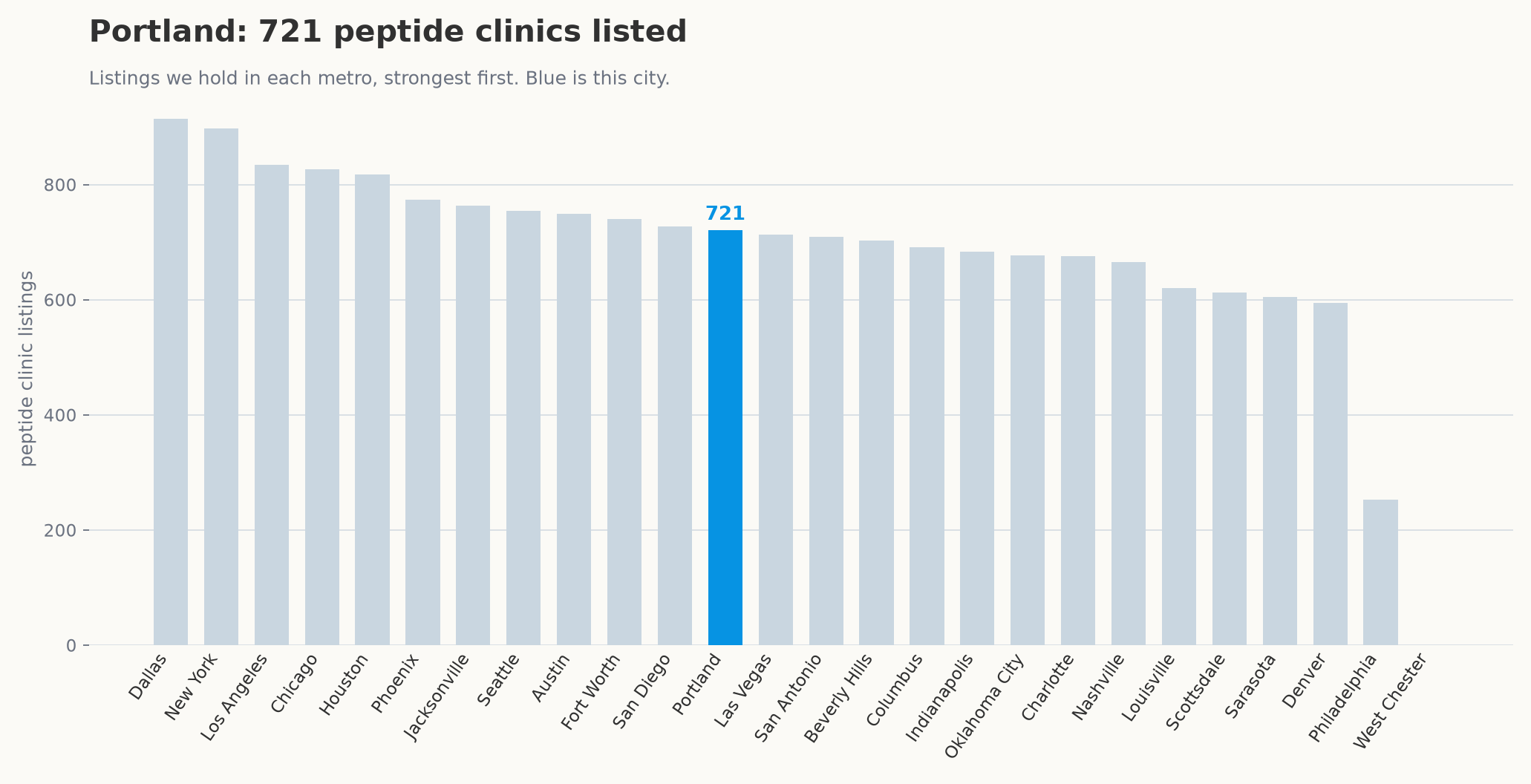
A peptide prescription in Oregon comes from a licensed prescriber. Federal law requires that prescription before a pharmacy dispenses a compounded peptide. The FDA also places several peptides on its Category 2 list, a designation that restricts compounding. Those rules cover telehealth visits and in-person visits.
Patients in Portland meet three license types.
Physician (MD or DO). A medical doctor or doctor of osteopathic medicine holds a full license from the Oregon Medical Board. This prescriber evaluates patients and writes prescriptions without a supervisor.
Physician assistant (PA). A PA holds a license from the Oregon Medical Board and practices under a supervising physician. A written protocol describes the care the PA provides.
Advanced practice registered nurse (APRN). An APRN, a group that includes nurse practitioners, holds a license from the Oregon Board of Nursing. This prescriber works under a supervising physician and a written protocol as well.
Ask the clinic which license type you will see at your visit. Ask for the prescriber's full name before you book. The answer shapes your care. A supervising physician may review charts, or may skip the appointment.
Confirm the license. The Oregon Medical Board publishes a public license lookup for MDs, DOs, and PAs. The Oregon Board of Nursing publishes a public license lookup for APRNs. Search the name, read the license status, and check the expiration date.
Then ask two questions. Which pharmacy compounds the peptide? What does the total monthly cost include? A prescriber with a valid, verified license is the floor. Start there.
The compounding pharmacy question
Most peptides sold through telehealth clinics lack FDA approval as drugs. A pharmacy that compounds them works under a section of the Federal Food, Drug, and Cosmetic Act. Two pathways matter.
Section 503A pharmacies compound for an identified patient. A prescriber sends a prescription for that person, and the pharmacy makes a batch sized to that order. These pharmacies hold state licenses and follow United States Pharmacopeia standards for sterile mixing. Section 503B facilities register with the FDA as outsourcing facilities. They compound larger batches, sometimes without a patient-specific prescription, and they face federal inspection on a set schedule.
The FDA maintains a Category 2 list. Substances on that list raise safety or effectiveness concerns, and the agency considers them unsuitable for compounding. A substance can land there after adverse event reports or a court finding. Ask whether a peptide you were offered appears on it. The FDA publishes the list, so the check takes a minute.
Then ask which pharmacy fills the prescription. You want the name, the city, and the license type: 503A or 503B. Call the state Board of Pharmacy in that state and search the license. Oregon licenses pharmacies through the Oregon Board of Pharmacy, and the public lookup shows standing and any discipline.
Two more questions help. Ask the clinic what dose the pharmacy prepares and whether the pharmacy tests each batch for sterility and potency. A compounding pharmacy that declines to answer tells you something about the operation.
Federal law requires a prescription before a 503A pharmacy dispenses a compounded peptide. That rule holds even when the peptide lacks FDA approval. A clinic that ships a vial without a valid prescriber relationship sits outside the framework. Enforcement details vary, and the FDA updates its list, so confirm the current status before you pay.
Questions that separate clinics
Ask for the prescriber's name and license number. Write the name down and check it against the Oregon Board of Medicine or the Board of Nursing public license lookup, which shows status and any discipline. A clinic that offers a title and a promise but no verifiable name gives you nothing to check, and a supervising physician belongs in the same lookup when a nurse practitioner signs the order.
Ask which pharmacy compounds the drug and whether it registers under 503A or 503B. Federal law treats the two categories in different ways, and a 503A pharmacy fills a prescription for a named patient. A vague answer about "our partner lab" tells you little, so ask for the pharmacy's name and city.
Ask what the initial evaluation includes. A thorough intake covers medical history, current medications, lab work, and a conversation about side effects. A ten-minute questionnaire with no labs gives a prescriber little to work with, and the clinic should tell you who reads the results.
Ask what happens if you have a reaction. Someone at the clinic should answer the phone, document the event, and report it to the compounding pharmacy and to the FDA MedWatch program. Ask for the after-hours number before you pay, since many telehealth operations route calls to a general inbox.
Ask for the total cost each month, itemized. The medication price and the consultation fee both count toward the figure you pay. Shipping and follow-up visits add more, so ask for the number in writing before you commit.
What Portland clinics get right and wrong
Portland's men's health market splits into two shapes. Franchise men's-health style clinics run locations in several cities. They bring a repeatable intake and a corporate parent. Physician-owned practices run one office or a small group. They bring a longer intake and a named prescriber. A local reputation follows the practice.
The franchise model gets speed right. A patient can complete a questionnaire and meet a clinician in a short window. The model gets accountability wrong in one key way. A complaint goes to a regional manager and a corporate office. The corporate parent holds the business license. The prescriber may work a shift and leave.
The physician-owned model gets continuity right. The same clinician reviews the history and writes the prescription. The prescriber's state medical license or nursing license sits on the line. A state Board of Medicine or Board of Nursing public lookup shows that license and any discipline. A patient can check the name before the visit.
Both shapes can compound peptides. Federal rules matter here. A 503A or 503B pharmacy compounds a drug, and the FDA decides whether that drug appears on the Category 2 list. The FDA has approved some peptides as drugs. It has withheld approval from others for compounding. A prescription must come before dispensing.
A patient asks two questions. Ask which pharmacy compounds the peptide. Ask what the total monthly cost includes. The answers tell a patient more than a franchise logo or a physician's white coat.
Red flags
Payment before evaluation. A clinic that asks for payment before a licensed prescriber reviews your history and current medications inverts the federal rule. A valid prescription must come first. Ask for the evaluation details and the prescriber's name. Then check that prescriber's license in the Oregon Medical Board lookup.
Guaranteed outcomes. A clinic cannot support a promise of a specific result from a compounded peptide. The FDA has not approved many compounded peptides for treatment. A clinic that offers a guarantee sells certainty it cannot support. Ask what the evaluation includes and what monitoring follows.
No verifiable practice address. Portland has many shared and virtual offices. You learn little from a street address alone. Ask for the clinic's physical location and the prescriber's practice address. Cross-check both against the licensing board record. You deserve an answer for a mismatch.
Urgency pressure. A clinic uses countdown timers and limited spots to push a decision before you gather facts. Legitimate care can wait for a records review. Ask for the total monthly cost in writing. A clinic that blocks questions before payment shows its priority.
Refusal to name the pharmacy. Federal law separates 503A and 503B compounders. A 503A pharmacy and a 503B pharmacy follow different rules. Ask which pharmacy compounds your peptide and whether that peptide appears on the FDA Category 2 list. A clinic that hides the pharmacy blocks the check you need.
What a legitimate Portland clinic looks like
A first appointment should end with documents a patient can keep. Four items matter.
The prescriber's name and license number. Write both down. Oregon's medical and nursing boards publish license lookups, and a patient can confirm the license status in the state that issued it. A clinic that stalls on this request tells you something.
The name of the compounding pharmacy. Federal rules require a prescription before a pharmacy dispenses a compounded peptide, and that pharmacy operates as a 503A or 503B facility. Ask which pharmacy fills the order and check its registration.
A written plan with costs. The document lists the drug, the dose, the schedule, and the cost. Ask what the price covers and what it leaves out.
A phone number or portal that reaches a person when a dose causes a reaction. Test it before you need it.
Most compounded peptides sold for wellness sit outside FDA approval. The clinic's transparency carries the weight. Expect specifics, and treat vague answers as a reason to ask again.
Frequently asked questions
Does Oregon require a prescription for peptide therapy?
Federal law requires a prescription before a pharmacy dispenses a compounded peptide. Oregon clinics that offer peptide therapy follow that rule. A clinic that sells peptides without a prescription raises a red flag.
How do I verify a Portland clinic's license?
Look up the prescriber's name in the Oregon Medical Board public roster or the Oregon State Board of Nursing license lookup. Ask the clinic which pharmacy compounds the peptides and whether that pharmacy holds a 503A or 503B registration. Confirm the clinic's address matches the license record.
Are compounded peptides FDA-approved?
FDA approves finished drug products, and compounded peptides fall outside that approval path. Some peptides sit on the FDA Category 2 list, which flags safety or effectiveness concerns. A pharmacy may compound them under limited conditions, so ask your prescriber about the specific peptide.
Can a Portland clinic prescribe peptides over a video call?
Oregon allows telemedicine for many services, and a video visit can satisfy the evaluation if the prescriber holds an active Oregon license. Ask the clinic what the video evaluation includes, how long it lasts, and whether a follow-up visit is required. Federal law still requires a prescription before dispensing.
What should peptide therapy cost in Portland?
Costs vary by peptide, dose, pharmacy, and whether the clinic bundles lab work or follow-up visits. Ask for the total monthly cost, including consultation, medication, shipping, and any required blood tests. A quote that omits those items hides the real price.