
San Antonio, Texas, has a busy market for peptide therapy. A search turns up clinics across the city, each with a site that advertises quick relief and same-week appointments. The details that matter sit behind a payment form.
Verification comes first. Before you send money, confirm a few things. Pull the prescriber's license from the Texas Medical Board or the Texas Board of Nursing public lookup, and read the status line. Ask which pharmacy compounds the peptide and whether that pharmacy holds a 503A or 503B registration. Ask what the evaluation includes: a physical exam and lab work.
Federal law requires a prescription before a pharmacy dispenses a compounded peptide. The FDA does not approve compounded peptides, and the agency placed several on its Category 2 list, which bars compounding. A clinic that collects payment before an exam and a prescription has skipped the part that protects you.
Who can prescribe peptides in Texas
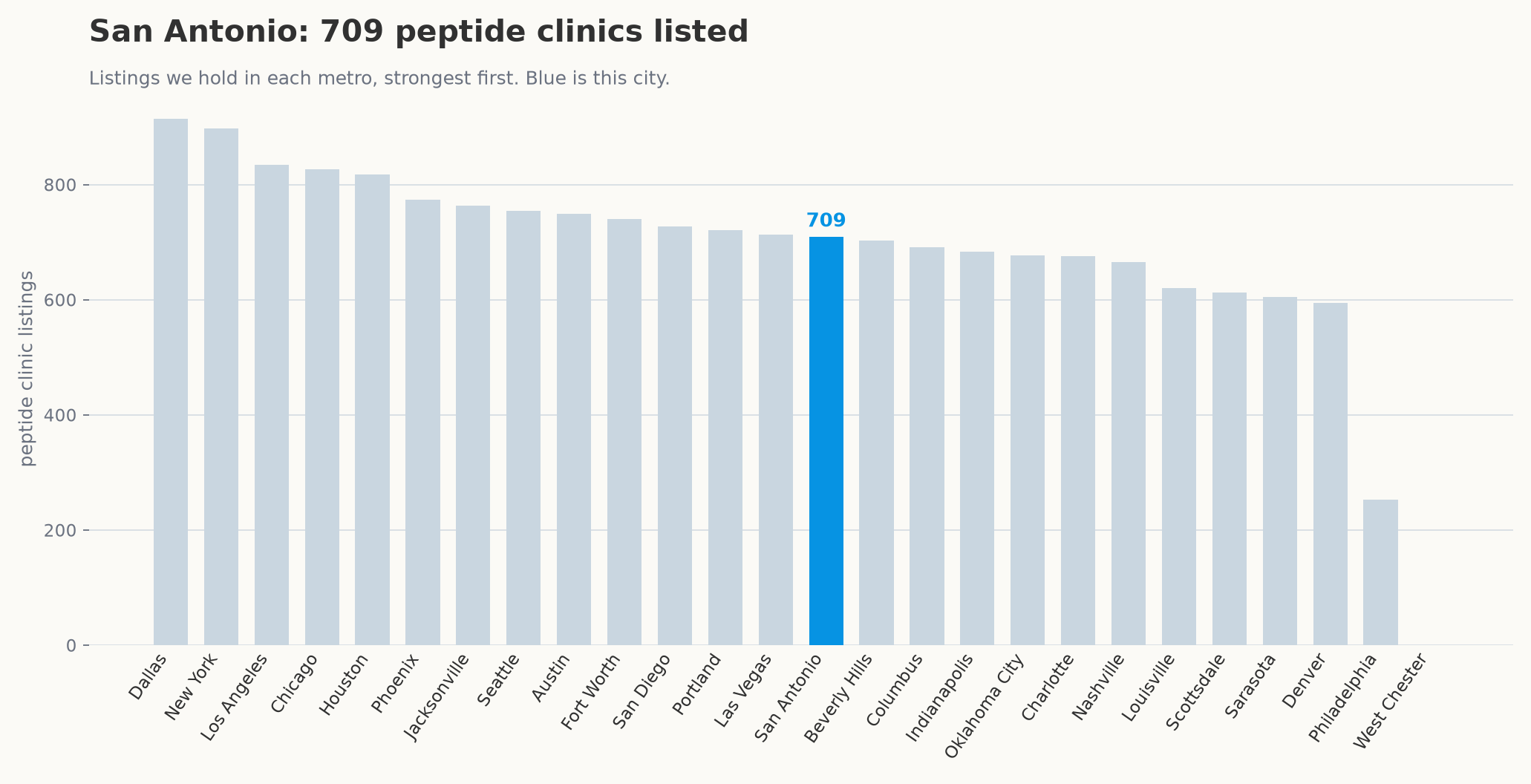
A prescription for a compounded peptide comes from a licensed prescriber. A pharmacy dispenses against that prescription, and federal law requires the prescription to exist before a 503A or 503B pharmacy compounds and ships the order.
Patients in San Antonio encounter three license types.
- Physician. An MD or DO holds a Texas medical license and prescribes without a supervising provider.
- Physician assistant. A PA holds a Texas license and practices under a supervising physician.
- Advanced practice registered nurse. An APRN holds a Texas nursing license and practices under a supervising physician.
A PA or an APRN prescribes under a written protocol or prescriptive authority agreement. The supervising physician signs that document, and it names the drugs and categories inside the delegate's scope. A clinic that cannot describe the agreement gives you a reason to keep asking.
Federal rules add another layer. The FDA places compounded peptides with no approved counterpart on the Category 2 list, which restricts bulk compounding of those ingredients. A telehealth clinic may still prescribe, and a 503A or 503B pharmacy may still dispense, within those limits.
Ask the clinic to name the license type you will see, and get the prescriber's full name and license number.
Then verify. The Texas Medical Board runs a public license lookup for physicians and physician assistants. The Texas Board of Nursing runs a public lookup for APRNs. Search by name or license number at no cost, and read the status line. An active, unrestricted license is the result to look for. A disciplinary history appears in the same record.
The compounding pharmacy question
Most peptides sold as wellness products lack FDA approval. A clinic in San Antonio cannot dispense a vial that a drugmaker approved. Compounded peptides arrive through a different path.
Federal law sets two tracks.
A 503A pharmacy compounds for a named patient with a prescription. The pharmacist prepares a formula for one person. State boards of pharmacy license these shops. Federal law requires the prescription before dispensing.
A 503B outsourcing facility makes larger batches. It registers with the FDA and follows current good manufacturing practice. A 503B can ship to clinics without a patient name attached, though a prescription still comes first. The FDA inspects these facilities.
Then there is the Category 2 list. The FDA maintains a list of bulk substances it considers unsuitable for compounding. A substance lands there when the agency sees safety or efficacy concerns. Some peptides sit on that list. A pharmacy that compounds from a Category 2 ingredient takes a federal risk.
Start with one question: which pharmacy fills the prescription?
Ask the clinic for the pharmacy name and license number. Then look it up. Texas licenses pharmacies through the Texas State Board of Pharmacy. Check license status on that public lookup. For an out-of-state 503B, check FDA registration on the agency drug establishment database.
Ask whether the pharmacy compounds from a bulk ingredient or from an FDA-approved drug. Ask for the certificate of analysis on the batch. That lab report names purity and sterility.
A clinic that dodges the pharmacy name raises a flag. Legitimate operations name their source.
Questions that separate clinics
Who prescribes, and what is that prescriber's license number?
Ask for the full name and license number of the prescriber who signs the order. In San Antonio, a patient can check the Texas Medical Board or Texas Board of Nursing public lookup. Confirm the license status and any public discipline record before booking. A clinic that stalls on this request gives a clear signal.
Which pharmacy compounds the medication, and does that pharmacy hold 503A or 503B status?
Ask which pharmacy compounds the peptide and whether it operates as a 503A compounder or a 503B outsourcing facility. Federal rules require a prescription before dispensing, and the FDA Category 2 list names ingredients that raise safety concerns. A clinic that cannot name the pharmacy or its registration type fails a basic check.
What does the initial evaluation include?
Ask who performs the evaluation and what it covers. A proper intake includes medical history, current medications, lab work when indicated, and a review by the prescriber. Ask whether the clinic provides a written plan and a follow-up schedule.
What happens if the patient has a reaction?
Ask who answers urgent calls and the expected response time. Ask about the clinic's process for documenting adverse events and whether it reports them to FDA MedWatch. Get the on-call process in writing before treatment starts.
What is the total monthly cost, including consultation, medication, and follow-up?
Ask for an itemized total that covers consultation, medication, lab work, shipping, and follow-up. Ask whether the clinic charges membership fees or adjusts the price after the first month. A quote that omits follow-up or refill costs hides the real expense.
What San Antonio clinics get right and wrong
San Antonio hosts two shapes of men's health practice. One is the franchise model, a corporate brand that runs locations in several cities. The other is a physician-owned practice where the prescriber holds a Texas medical license and sees patients in one market.
Franchise clinics get scheduling right. A patient can book online, walk in, and leave with a prescription the same day. The corporate parent supplies the protocol and the pharmacy contract. That speed draws patients. The tradeoff shows up in accountability. A complaint about a compounded peptide goes to a corporate office, and the prescriber may hold a part-time role.
Physician-owned practices run a longer intake. The visit includes a full history and a conversation about goals. The prescriber's name and license number appear on the state Board of Medicine lookup. Accountability sits with that person. If the practice breaks a rule, the license is at risk.
Both shapes operate under the same federal rules. A prescription must precede dispensing. A 503A pharmacy compounds for a named patient. A 503B pharmacy registers as an outsourcing facility. The FDA Category 2 list names peptides that raise safety concerns. Patients can ask which pharmacy compounds a peptide and what the monthly cost covers. The answers separate a careful clinic from a rushed one. The FDA list can change, so confirm the current version before a visit.
Red flags
A clinic that collects payment before a licensed provider evaluates you raises a flag. Federal law requires a prescription before a pharmacy dispenses a compounded peptide. Ask for evaluation prior to payment. A demand for upfront payment bypasses that order.
Guaranteed outcomes signal a problem. No clinic can promise a specific result from a compounded peptide. The FDA has not approved most compounded peptides for any use. A guarantee of weight loss or recovery lacks support. Ask what the evaluation includes. A provider who offers certainty about an uncertain product misleads you.
A practice with no verifiable address deserves scrutiny. Check the prescriber's state license in the Texas Board of Medicine or Board of Nursing public lookup. A valid license lists a physical location. A website with a mailbox or a virtual office and no street address gives you no way to confirm the provider. Ask for the address and the license number.
Urgency pressure works against clear thinking. A clinic that says a price ends this week or a slot closes in an hour pushes you to skip the license lookup. A legitimate practice lets you check the pharmacy and the provider. Federal rules for 503A and 503B pharmacies allow time for a prescription. Countdown timer has no place in a medical decision.
A refusal to name the compounding pharmacy blocks your verification. Ask which pharmacy compounds the peptide. Ask whether that pharmacy holds a 503A or 503B registration. Check the FDA Category 2 list for the peptide. A clinic that hides the pharmacy source prevents you from checking records.
What a legitimate San Antonio clinic looks like
Four items belong in your hands before you leave the first appointment.
1. The prescriber's name and license number. A physician holds a Texas Medical Board license. A nurse practitioner or physician assistant holds a Texas Board of Nursing or Texas Medical Board license. Board lookups are free and open to the public. Confirm the license status is active.
2. A compounding pharmacy you can check. Ask which pharmacy fills the order and whether it registers as a 503A pharmacy or a 503B outsourcing facility. A 503B facility appears on the FDA outsourcing facility list. A 503A pharmacy holds a Texas State Board of Pharmacy license. The FDA Category 2 list names ingredients the agency considers unsafe for compounding.
3. A written plan with costs. The plan states the drug, the dose, the refill schedule, and the monthly total.
4. A reachable contact. A phone number or portal that answers when a dose causes a reaction, with instructions for after hours.
A prescription must come before dispensing. Ask for these four items at the visit, and ask again if a clinic stalls.
Frequently asked questions
Does Texas require a prescription for peptide therapy?
Yes. Federal law requires a prescription before a pharmacy dispenses a compounded peptide, so no prescription means no dispensing. A San Antonio clinic cannot sell a compounded peptide as an over-the-counter product. The prescriber must hold a Texas license, and the pharmacy must follow 503A or 503B rules.
How do I verify a San Antonio clinic’s license? Ask for the prescriber’s full name and license type, then check that name in the Texas Medical Board or Texas Board of Nursing public lookup for license status, expiration date, and any public disciplinary record. Ask which pharmacy compounds the peptide and confirm that the pharmacy holds a Texas State Board of Pharmacy license, or that a 503B facility appears on the FDA outsourcing facility list.
Are compounded peptides FDA-approved? No. The FDA approves finished drug products, and a compounded peptide preparation does not hold that approval. Some bulk peptide substances appear on the FDA Category 2 list, which names ingredients the agency considers unsafe or ineffective for compounding.
Can a San Antonio clinic prescribe peptides over a video call? Texas allows telemedicine prescribing when the prescriber holds a Texas license and follows state rules for the practitioner-patient relationship. Ask whether the visit includes a licensed Texas prescriber and whether the clinic requires an in-person step. The prescription must come before the pharmacy dispenses.