
Peptides are short chains of amino acids, the building blocks of proteins. They have different roles in the body. For people asking about weight loss, muscle growth, skin care or general health, the useful next question is: which peptides, in what form, and for what purpose? The broad label “peptide therapy” cannot answer that.
Your health question may help narrow the search beyond a wellness package. Are you comparing medicines for weight loss, collagen supplements for skin, or a claim about muscle recovery? Write down the exact ingredient and the result you want to understand.
Products containing peptides include prescription medicines, compounded drugs, cosmetics, dietary supplements and investigational substances. Health content may mix these categories; a drug label answers different questions from a skin-care advertisement.
A natural role in the body does not establish that a supplement or injection will provide a treatment benefit. To explore local options, use our clinic-request page to ask about clinics in your city. Directory inclusion is not a treatment recommendation.

AI-generated editorial illustration; not a real patient or clinical encounter.
Key Takeaways
- Peptides are molecules made from linked amino acids.
- “Peptide therapy” is a broad label, not the name of a specific treatment.
- There is no single safety verdict applicable to everything containing peptides.
- Natural roles in the body do not guarantee treatment benefits.
- Use current sources to distinguish approved uses from investigational research.
What Are Peptides? A Plain-Language Definition
Peptides are compounds made of amino acids joined by peptide bonds. The National Library of Medicine describes their chemistry this way; the definition does not establish a treatment benefit.
Peptides and proteins are related terms. NLM describes proteins as larger versions of peptides that can form complex structures, including enzymes and receptors. That chemistry definition does not establish a product’s health or wellness benefits.
Natural Roles of Peptides in the Human Body
Insulin and blood sugar
Insulin provides a familiar example of a peptide hormone. Endotext describes its 51 amino acids arranged in two linked chains. NIDDK explains that insulin is made by the pancreas and helps glucose enter cells for energy. This describes insulin, not a claim that all peptides lower blood sugar.
GLP-1 and digestion
A review in Molecular Metabolism describes GLP-1 effects including glucose-dependent insulin secretion, slower stomach emptying and reduced food intake. The natural hormone and a particular prescription medicine are not interchangeable concepts; a drug has its own formulation, evidence and labeling.
Endorphins and GHRH signals
The StatPearls endorphin review describes roles in pain regulation and reward signaling. Endotext explains that growth hormone-releasing hormone (GHRH), made in the hypothalamus, stimulates growth hormone production and release. These examples illustrate different biological functions rather than a shared treatment benefit.
Normal function is not product proof
A role in the body does not establish benefits from a cream, capsule or injection for muscle recovery. If an advertisement promises muscle repair or immune system support, ask what human evidence concerns the exact substance, formulation and intended use—not simply how peptides work in the body.
For a health claim, look for the people studied, what was tested, the comparison group and outcomes measured. Do not substitute a description of the body’s own signaling system for evidence about a marketed product.
Peptides Used in Care: What Does Peptide Therapy Mean?
For people comparing treatments, the term peptide therapy does not identify a particular medicine, intended use or administration route. Ask a licensed clinician for the exact medicine and its approved labeling or other supporting evidence. This guide gives no administration instructions.
FDA approval is specific to an intended use. A marketing term cannot establish that a treatment is approved or that its benefits outweigh its risks. Ask what evidence supports the exact treatment being discussed, rather than treating all peptide medicines, supplements and investigational compounds as interchangeable.
Comparing Products That Contain Peptides
First identify the category: prescription medicine, compounded drug, cosmetic, dietary supplement or investigational substance. Comparing collagen supplements with prescription treatments, for instance, requires attention to the exact preparation, purpose and evidence.
FDA-Approved Peptide Medicines
FDA approval concerns a particular medicine and intended use. It is not a general approval of everything marketed as peptide therapy.
The examples later in this guide name the specific brand, formulation and population described in its prescribing label. Those examples do not mean that medicines with similar ingredients or names are interchangeable.
Compounded Peptides and Their Regulatory Status
Compounded drugs are not FDA-approved. FDA does not verify their safety, effectiveness or quality before marketing.
Compounding is nevertheless subject to applicable federal and state requirements; the oversight and quality standards depend on the setting. It can serve a medical need when an FDA-approved medicine is not appropriate.
Cosmetics Containing Peptides
A peptide ingredient does not by itself determine whether a skincare product is a cosmetic or a drug. FDA explains that intended use matters: cleansing or changing appearance differs from treating disease or affecting body structure or function. A cosmetic may also meet the definition of a drug.
For skin-care benefits, look beyond the ingredient name. Ask whether a study tested the finished cream and measured the advertised change in appearance.
Dietary Peptide Supplements
Peptide supplements are not FDA-approved for safety and effectiveness.
That does not mean they are unregulated: manufacturers must meet applicable safety, labeling and quality requirements, and the FDA can take action when safety concerns arise. A supplement claim should not be presented as proof that a medicine works for a particular condition.
Peptides Studied in Research
A research-use label is not evidence that a product is an approved treatment. In an August 24, 2026 warning letter to Peak Performance Peptides, FDA explained that its assessment considered the seller’s intended human uses despite research-only disclaimers. Check the exact substance, formulation and intended use; do not treat a laboratory listing or marketing description as a prescription or a clinical-study result.
Four details may help you compare health or wellness claims: the exact name, intended use, category and supporting evidence. Use this check for muscle, weight or skin concerns; the answers may differ.
These details may help you discuss specific peptides and your health question with a doctor instead of comparing promised wellness benefits.
FDA-Approved Peptide Medicines: Uses and Examples
Approval does not mean zero health risk. Read the current label for the exact medicine, its intended use and safety information.
Approved uses are specific to a medicine and its formulation. The following are two examples of labeled uses, not a complete list of indications and not personal treatment recommendations.
Mounjaro (tirzepatide) is indicated alongside diet and exercise to improve blood sugar control in adults and children aged 10 years and older with type 2 diabetes. Wegovy (semaglutide) injection is indicated alongside a reduced-calorie diet and increased physical activity for long-term weight reduction in adults and children aged 12 years and older with obesity, and adults with overweight plus at least one weight-related condition.
These examples do not make the medicines interchangeable or establish that either is appropriate for a particular reader. Read each current prescribing label, including its boxed warning, contraindications and other warnings, and discuss the exact medicine and intended use with a licensed clinician.
Compounded Peptides and Gray-Market Products
Compounded drugs are not FDA-approved: FDA does not review their safety, effectiveness or quality before marketing. This does not mean compounding is unregulated. Applicable federal law covers compounding by licensed pharmacists, physicians and outsourcing facilities. Compounding can address medical needs when an FDA-approved medicine is not appropriate.
A compounded prescription and a research-only listing are different categories. Neither name establishes a medicine’s identity or suitability.
Ask who prepared the medicine, which pharmacy or facility supplied it, and why an approved option would not meet the patient’s medical need. Ask about the actual preparation and medical need, not a general health or wellness promise.
Definition and Sources of Compounded Peptides
FDA describes compounding by licensed pharmacists, physicians and outsourcing facilities under applicable federal law. Oversight and quality requirements vary by setting.
A clinic’s marketing name does not identify the compounder. Ask your doctor for the actual pharmacy or facility, then verify its license before making a decision about your health.
Risks of Unregulated Injectable Peptides
FDA warns that buying medicines from unlicensed or unregulated online sources can expose patients to poor-quality products. Its compounding guidance also identifies contamination and too much or too little active ingredient as possible consequences of poor compounding practices. These are specific risks, not proof that every online product is contaminated. Verify the pharmacy and the identity of the compounder, and discuss the exact medicine with a licensed clinician or pharmacist.
Risk assessment needs to concern the exact substance, formulation and intended use. A warning about one medicine should not be generalized to all peptides. Ask a licensed clinician or pharmacist to explain the current prescribing information and the evidence relevant to the product being discussed.
FDA Concerns About Safety and Contamination
When reading online content about a safety warning, identify the exact drug, preparation and event it concerns.
Ask the doctor or pharmacist what the warning means for the proposed care, which side effects require attention, and whom to contact with a concern. A general peptide label cannot answer those questions.
Skin Care and Supplements: What to Ask About Peptides
For a skin-care claim about collagen or peptides, ask whether evidence concerns the finished formula or only an ingredient. Look for the study population, comparison, measured change in skin appearance and follow-up period.
Evidence about a skin cream does not establish the benefits of oral collagen supplements or an injectable medicine. Match the form studied to the form being discussed.
The FDA distinguishes cosmetic appearance claims from intended uses that treat disease or affect body structure or function. A product can fall into both categories.
Collagen, peptides or another familiar ingredient do not settle that classification or establish a health benefit. The intended use and evidence still matter.
For people preparing for an appointment, list your health question, the exact substance and formulation, its intended use and the source of each claim. Ask the clinician which evidence applies to your situation and which qualifications you should verify. Use our clinic-verification checklist to prepare questions before booking.
If cost is part of your decision, use our peptide clinic pricing questions to compare the written total before you pay.
FAQ
What are peptides used for?
There is no single treatment benefit that applies to every peptide. Evidence needs to concern the exact medicine and intended use. FDA approval reflects a benefit-risk assessment for an intended use, not a class-wide promise of muscle growth, skin improvement, joint health or weight loss.
How do peptides differ from amino acids?
Peptides are short chains made up of amino acids. While amino acids are the building blocks of proteins, peptides serve various roles in biological processes, including acting as hormones and signaling molecules.
Are peptide supplements safe to use?
Safety questions concern the exact ingredients, formulation and evidence—not one verdict for every supplement. People considering a supplement should discuss that preparation with a licensed clinician or pharmacist. Dietary supplements are not FDA-approved for safety and effectiveness; do not confuse them with approved prescription medicines.
Can peptides help with aging?
People asking about aging need to separate skin appearance from disease treatment or changes to body function. Ask for evidence about the exact formula and outcome. An ingredient name does not establish an anti-aging benefit; FDA approval of one medicine does not approve unrelated cosmetic claims.
What should I consider before starting peptide therapy?
Bring the exact product name and formulation, your reason for considering it, and any medicines or supplements you already use to a licensed clinician. Ask: Which evidence applies to this use? What are the known risks and uncertainties? What monitoring would be needed? Who should I contact with a concern? This is a question checklist, not a recommendation to start treatment.
How are peptides administered in therapy?
Administration depends on the exact medicine and formulation. Follow its current prescribing information and the instructions of the licensed clinician providing care. A cosmetic cream or oral dietary supplement should not be described as interchangeable with a prescription medicine. This guide gives no administration or self-injection instructions.
Do all supplements with peptides have the same side effects?
For people comparing peptide supplements, there is no single side-effect list. Identify the exact product and ingredients first. For a prescription medicine, review its current prescribing information with a clinician or pharmacist. Do not assume that the side effects of an injectable medicine also describe an oral supplement or cosmetic.
What is the difference between FDA-approved peptides and compounded products?
FDA-approved drugs are reviewed for safety and effectiveness for their intended use. Compounded drugs are not FDA-approved, and FDA does not verify safety, effectiveness or quality before marketing. Compounding is still subject to applicable law and can address a medical need when an approved medicine is not appropriate.
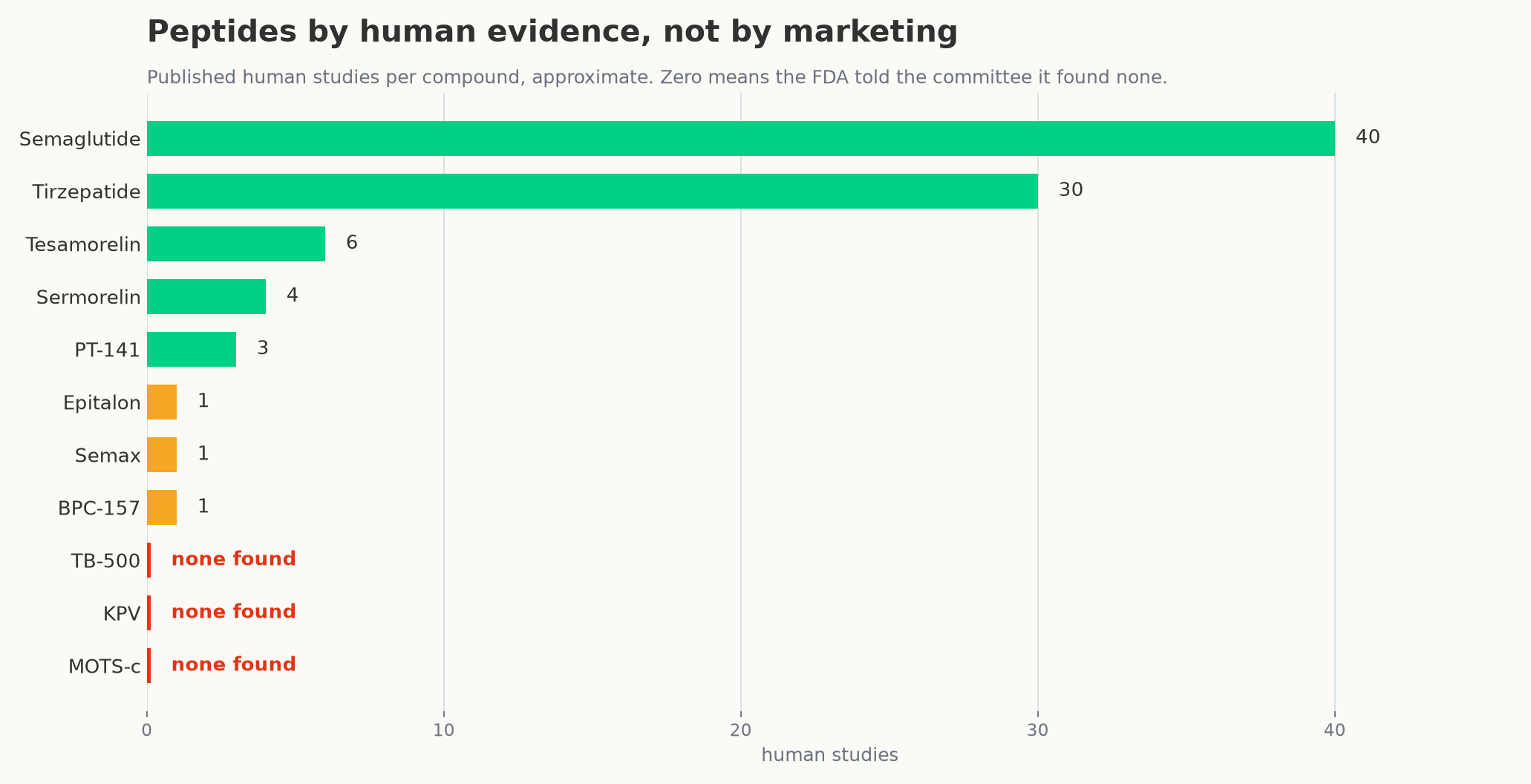
Which of these compounds may a compounding pharmacy lawfully prepare, and in which state? The peptide regulatory status tracker sets out FDA status compound by compound, with dates and sources.
For the compound-by-compound version of that record, including the FDA safety page and the two enforcement letters, read our peptides explained walkthrough.